Rightmove has launched a beta "conversational search" experience powered by Google Cloud's Gemini models. Buyers can now click "Use AI" and search in plain English: "Victorian terrace with period features, a proper garden, and space to work from home near the station".
On paper, that sounds like a minor UI update.
In reality, it signals a fundamental shift: portals are moving from filters to interpretation.
And whilst Rightmove has been explicit that agents don't need to change how they list properties right now, as a marketing partner, we think it's worth getting ahead of where this is going.
Because the agents who understand this shift early will outperform those who don't.
Why This Matters: Listings Start Behaving Like SEO
Historically, discovery on portals has been driven by structured fields (price, beds, location) and how compelling your lead image is in a crowded results page.
Rightmove's own guidance has long reinforced how important the hero photo is, particularly on mobile where the first image does most of the work.
Conversational search adds a second layer: matching homes to described intent.
So the question shifts from:
"Do we have nice photos?"
…to:
"Are we making it easy for the platform to correctly interpret this home and match it to the right buyer intent?"
That is the SEO-like part. Not gaming the system, but improving clarity, relevance, and signals.
If a buyer searches for "bright kitchen with space for a family table" or "south-facing garden that gets sun all day", the platform has to understand whether your listing matches. And it does that through a combination of your copy, your photos, and the signals they provide.
The agents who win in this environment aren't the ones with the most photos. They're the ones with the most relevant, interpretable content.
What Changes for Property Marketing
1. Shot Selection Becomes a Search Strategy, Not Just a Creative Choice
Rightmove has published years of advice on using photos to "show off unique features" and lead with the best image.
With conversational search, "unique features" aren't just nice-to-haves. They become matching signals.
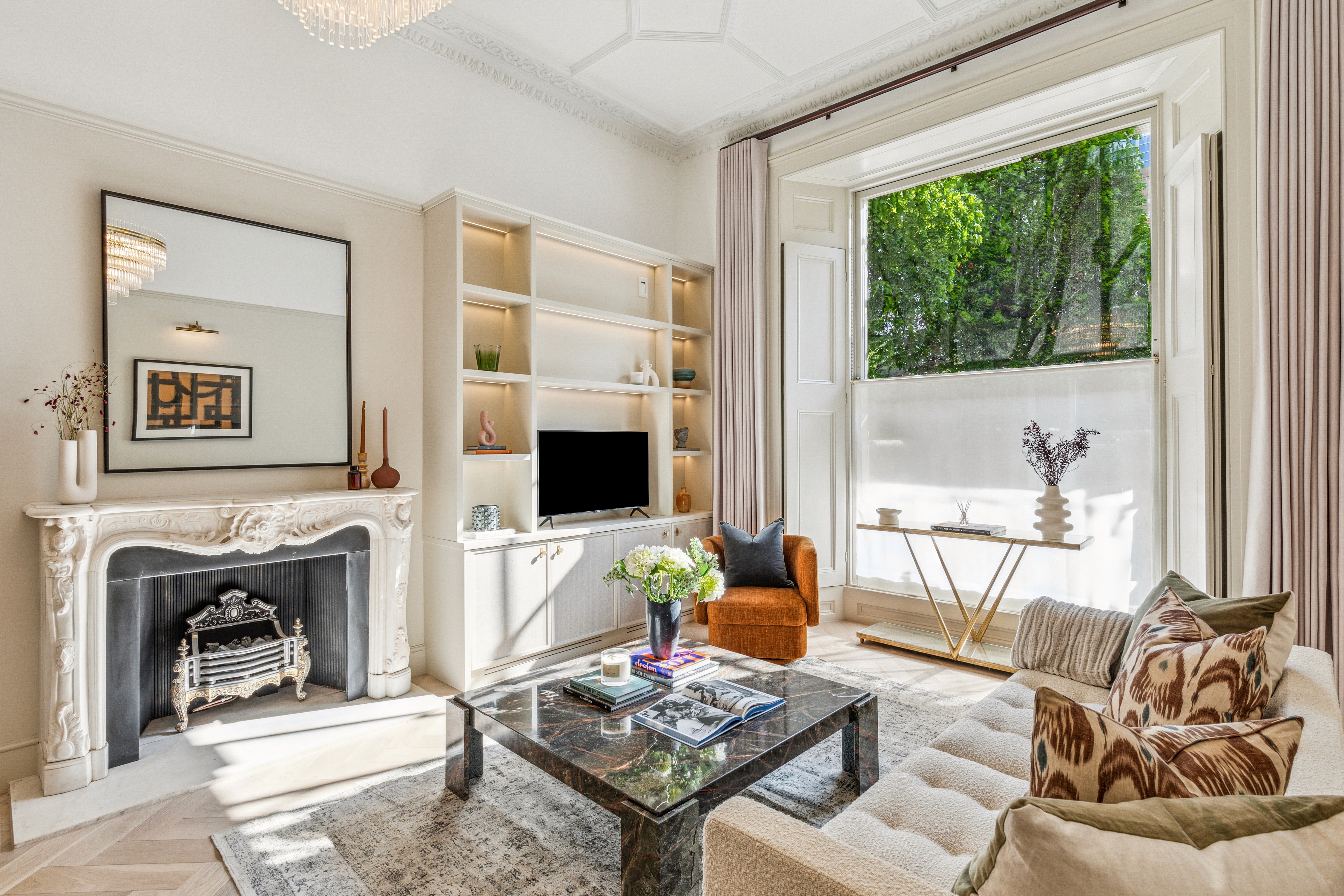
If the buyer asks for "period details", "great natural light", "exposed brick", "south-facing garden", or "renovated finish", your images need to make those things unmissable.
This means:
Your hero image must communicate the strongest selling point immediately (not just be the exterior by default)
Feature-led shots matter more than room documentation (show the renovated kitchen from the angle that proves it's renovated, not just any wide shot)
Visual evidence backs up your copy (if you say "flooded with natural light", your photos must prove it) What will this mean for virtual staging?
Example: You're listing a Victorian terrace that's been extended with a modern kitchen. The buyer searches: "Victorian home with modern kitchen near good schools".
Does your hero image show the kitchen extension? Do your photos make the period features (fireplaces, cornicing, sash windows) obvious? Does your copy mention the school catchment?
If yes, you're giving the AI clear signals to match you. If no, you're relying on luck.
2. The "8-10 Photos" Rule Needs Rethinking for Relevance Over Teaser
Rightmove's consumer-facing guidance still suggests around 10 images showing a home's best assets. Their agent resources emphasise quality and variety, with data showing that listings with 5–9 images perform strongly by driving action rather than viewers making a decision about if its right for them online.
What changes with conversational search is that photos are no longer only for buyer persuasion. They also help with buyer matching.
There's a genuine case that more relevant, varied photos can:
Give the platform better context to understand the property
Reduce mismatches (fewer enquiries from buyers who aren't actually a fit)
Improve how often the right buyers see the listing in the first place
The keyword is relevant.
More near-duplicates rarely help. But more distinct, information-rich frames often do.
If you've ordered 24 high-quality images from your shoot, don't arbitrarily cap yourself at 10 for the listing if images 11-15 introduce genuinely new information: outdoor space from different angles, home office setup, accessible features, and area context.
The goal isn't "more photos". It's "more interpretable signals".
3. Lifestyle Imagery Becomes Strategic, Not Just Nice-to-Have
Conversational prompts will often be human, not technical:
"a kitchen for hosting"
"a calm bedroom"
"space to work from home"
"family-friendly layout"
"a garden that gets sun"
Lifestyle images perform here because they communicate use and feeling quickly, rather than merely proving that a room exists.
This aligns with Rightmove's longstanding advice to lead with the image that best showcases the property's strongest asset. The "asset" is now often a lifestyle outcome, not just a room.
A kitchen shot with a dining table set for six communicates "hosting" faster than an empty kitchen. A bedroom with soft lighting and minimal staging communicates "calm retreat" more effectively than a clinical wide shot.
But here's the critical part: lifestyle imagery only works if it's honest and backed by reality. If you stage a tiny kitchen to look like a hosting space when it genuinely isn't, you're creating mismatches. The AI might surface you to the wrong buyers, and you'll waste everyone's time.
Lifestyle shots are strategic when they accurately communicate what the property actually offers.
4. Emotive Copy Matters More, But Only If It's Specific and Provable
As people search in natural language, copy will tilt towards the way people actually speak: "bright", "quiet", "cosy", "move-in ready", "modern", "renovated".
Rightmove has historically advised agents to avoid duplicating basic facts and instead focus on key assets and paint a picture. That becomes even more important if the search layer is interpreting intent from language.
The trap is vague adjectives with no evidence.
If you say "modern and renovated", your images must prove it.
How to portray "modern" and "renovated" through imagery:
A single wide shot of a kitchen is rarely enough. "Modern" is a set of visual cues. Capture a mix that demonstrates:
Consistency across rooms – the finish should look coherent, not like one renovated room and three legacy rooms
Material cues – worktops, cabinetry, flooring, window treatments
Detail frames that signal quality – hardware, tiling alignment, integrated appliances, joinery, feature lighting
Order that tells the story – start with the value moments, then show flow and supporting spaces
This is also where feature-led coverage helps. Shoot broader on site, then curate down to the most relevant story afterwards, rather than guessing the final set before you've seen what the property offers.
What to Measure (So This Doesn't Become Guesswork)
If you want to treat this like SEO, measure like SEO:
1. Matching quality Are enquiries more aligned with the property's real strengths? If you're getting enquiries from buyers who are genuinely a fit (not just volume), that's a signal your content is working.
2. Mismatch reduction Are you getting fewer "wrong fit" leads that never convert? Wasting time on viewings with buyers who were never going to purchase is expensive. Better matching fixes this.
3. Hero image performance Does changing your lead image shift click-through, lead volume, or lead quality? Rightmove's own guidance suggests it can. Test it.
The Competitive Edge in a More Filtered Market
Rightmove says the existing search is unchanged and this is an experiment, available to a small audience for now. But the direction is clear: portals are investing heavily in AI-led experiences for both consumers and partners.
In that world, standing out becomes less about broad appeal and more about:
Sending clear signals the platform can interpret
Creating emotional resonance the buyer can feel in one click
Matching the right buyer persona early, so you don't waste impressions on the wrong audience
The agents who adapt early won't just survive this shift. They'll dominate it.
How Click Thinks About AI-Ready Content
We've always approached property marketing as a strategic exercise, not just documentation. That philosophy aligns naturally with where conversational search is heading.
Here's how we're supporting clients through this shift:
Feature-led shot selection: We don't just shoot rooms. We identify the features that matter at your price point and capture them in ways that communicate value clearly. Period details. Natural light. Outdoor space. Renovated finishes. These become interpretable signals, not just pretty pictures.
Relevance over arbitrary limits: Our packages go up to 24 photos giving you room to introduce genuinely new information (garden from multiple aspects, home office setup, accessibility features). We're also able to add account preferences to ensure we capture a set amount of lifestyles or specific rooms.
Lifestyle imagery that's honest: We'll stage and shoot lifestyle moments when they authentically represent what the property offers. A kitchen that genuinely works for hosting gets shot that way. A garden that actually gets sun all day gets captured at the right time to prove it.
Measuring what matters: We're working with clients to track enquiry quality, not just enquiry volume. If conversational search drives better-matched buyers, that shows up in viewing conversion and close rates.
If you're thinking strategically about how AI-driven search changes your marketing approach, we're the partner built for that conversation.
Work with Click on AI-ready property marketing
FAQs
Will conversational search replace Rightmove's normal search? No. Rightmove says the existing search functionality hasn't changed, and conversational search runs in a separate chat window alongside it.
Do agents need to do anything differently right now? Rightmove says there's "no need to do anything differently" and to follow existing best practices. But getting ahead of where this is going gives you a competitive edge.
Should I add more photos to my listing because of AI? Not automatically. Add relevant photos that introduce new information (features, finishes, outdoor space, flow). Avoid duplicates or near-identical shots.
Will lifestyle shots help? They can, if they communicate intent quickly (hosting, working from home, family living) and are backed by an accurate, honest representation.
How do I show a renovated home in photos? Capture consistency across rooms, material quality cues, detail shots that prove finish level, and order them to tell the renovation story clearly. One wide shot of a kitchen doesn't communicate "renovated" – a series of detail and context shots does.